- Zahnärzte Dres. Zimny & Kollegen
-
Uhlandstr. 53
10719 Berlin-Wilmersdorf - [email protected]
- 030 889 20 20 0
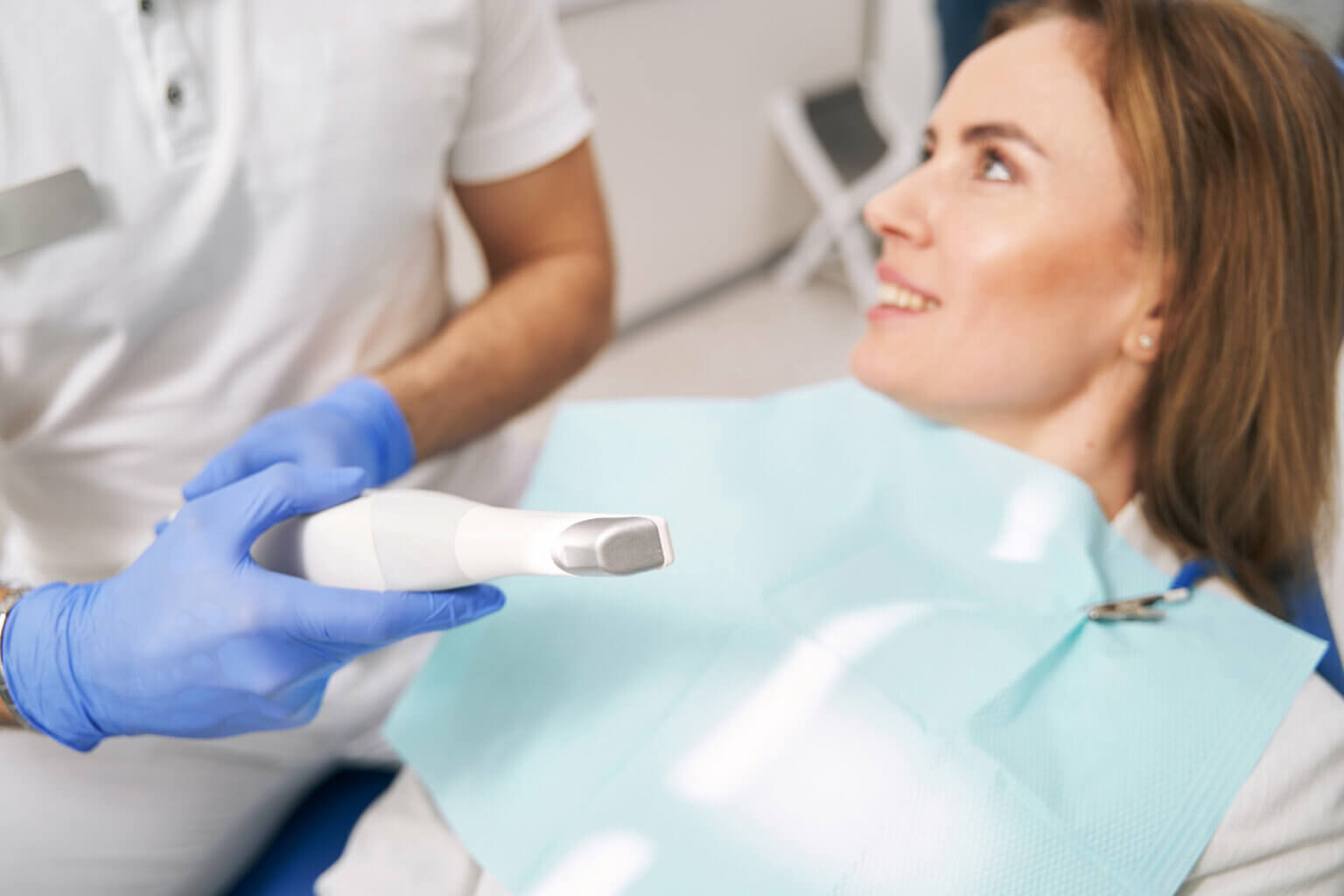
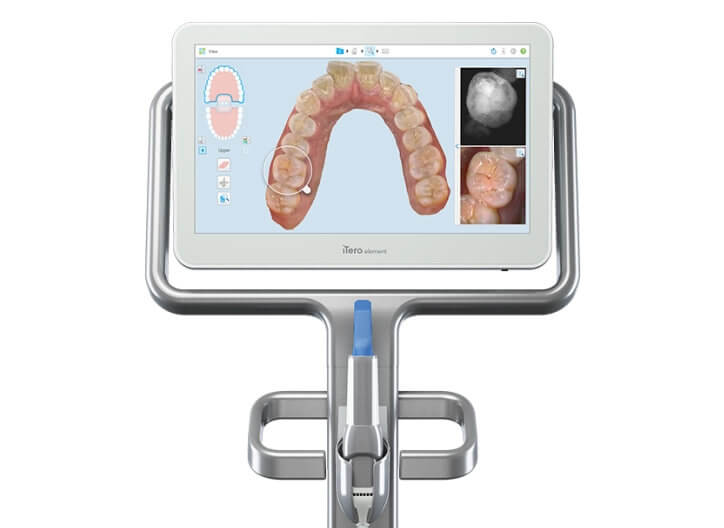

Unsere Dental-Scanner bieten Patienten eine Vielzahl an Vorteilen. Zunächst ermöglicht die Technologie eine präzise und detaillierte Erfassung der Zahn- und Mundstruktur in 3D, was eine genauere Planung und Visualisierung des gewünschten Endresultats des Lächelns ermöglicht. Dies erhöht das Vertrauen des Patienten in den Behandlungsprozess, da er eine klare Vorstellung davon bekommt, wie das Endergebnis aussehen wird.
Darüber hinaus ist der Scanning-Prozess mit dem Dental Scanner schnell und komfortabel. Es entfällt die Notwendigkeit für traditionelle, oft unangenehme Abdruckmaterialien, was besonders für Patienten vorteilhaft ist, die zu Würgereflexen neigen oder Angst vor zahnärztlichen Eingriffen haben. Der Scanner reduziert auch die Behandlungszeit, da die digitalen Daten sofort verfügbar sind und schnell in unserem hauseigenen Meisterlabor weiterverarbeitet werden können.

Die Genauigkeit des Dental Scanners trägt auch zu einer verbesserten Behandlungsqualität bei. Indem er exakte Abmessungen liefert, können unsere Zahnärzte in Kombination mit unserer Dentalsoftware maßgeschneiderte Behandlungspläne entwickeln, die genau auf die individuellen Bedürfnisse des Patienten abgestimmt sind. Dies führt zu besseren Behandlungsergebnissen und einer höheren Zufriedenheit der Patienten.
Insgesamt bietet der Dental-Scanner eine innovative, patientenfreundliche Lösung, die den Prozess des Digital Smile Designs optimiert und für Patienten eine angenehmere, effizientere und präzisere zahnmedizinische Erfahrung ermöglicht.
Die brandneue Technik bedeutet für den Patienten einen erheblichen Zugewinn an Komfort, Zeitgewinn und Sicherheit. In der Vergangenheit stellt der Zahnabdruck eine unangenehme Empfindung bei Zahnarztbesuch dar. Darüberhinaus ist die daraus entstehende Arbeitskopie des Gebisses zwar eine solide Basis für Zahnarzt und Zahntechniker, jedoch ist sie alles andere als wirklich exakt. Nur der ausgewiesenen Erfahrung von Mediziner und Labor ist es zu verdanken, dass der auf der Basis des Abdrucks angefertigte Zahnersatz meist so exakt passten.
Mit dem neuen, digitalen Abdruck schreitet die Digitalisierung der Zahnarztpraxis zum Wohle des Patienten den nächsten Schritt voran. Neben der Möglichkeit, nunmehr berührungslos einen Abdruck zu nehmen, also völlig ohne Beklemmung oder Würgereizen, liegt en Echtzeit ein digitales Abbild der Ist-Zustandes von Zähnen und Kiefer vor. Auf dieser Basis kann in maximal 2 Stunden der detailgetreue und exakt passende Zahnersatz angefertigt werden, ein zeitraubender Folgebesuch entfällt ersatzlos. So ist der digitale Abdruck nicht nur ein Komfortgewinn sondern auch ein Zuwachs an Präzision und Sicherheit. So lassen sich digitale Abdrücke auch noch nach Jahren zur Rekonstruktion aus Unfällen oder Zahnausfällen nutzen.
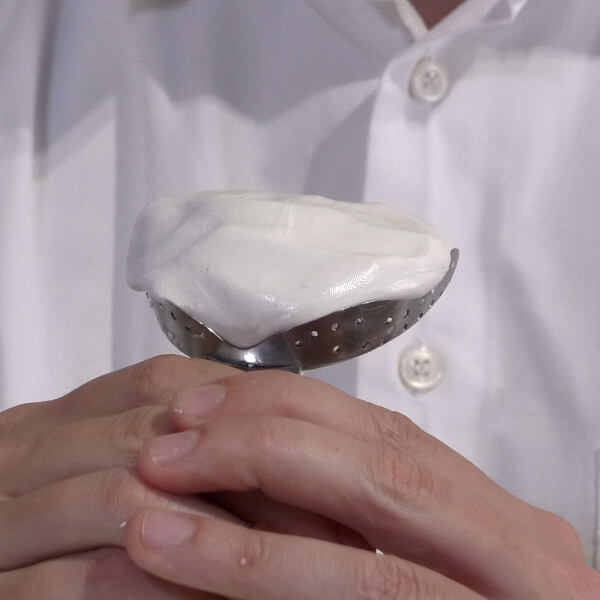
Ein Traum wird wahr. Durch den Einsatz des digitalen Abdrucks wird ab sofort keine herkömmliche Abdruckform mehr benötigt. Damit gehören die unangenehmen Gefühle der Beklemmung, der Würgereiz und die unliebsame Knetmasse der Vergangenheit an. Die moderne Variante ist der digitale Zahnabdruck. Dr. med. dent. Burghardt Zimny beantwortet im Videointerview spannende Fragen rund um das digitale und berührungslose Verfahren, dass in seiner gesamten Praxis zum Einsatz kommt.
Videointerview Teil 1:
Die konventionelle Methode mit Abdruckmasse führt in vielen Fällen zu beklemmenden Würgen
Videointerview Teil 2:
Nach wenigen Sekunden entsteht ein reales 3D-Bild des Kiefers und der Zähne
Videointerview Teil 3:
Wie ein Implantat angepasst wird und welche Rolle das Hightech Material Titan spielt
Videointerview Teil 4:
Bessere Übersicht ermöglicht schnellere und präzisere Ergebnisse
Videointerview Teil 5:
Deutlich präzisere Ergebnisse und mehr Lebensqualität durch viel gewonnene Zeit
Videointerview Teil 6:
Bereits seit 2019 erhält jeder Patient bei uns kostenfrei seinen digitalen Abdruck
Der konventionelle Zahnabdruck mit dem metallenen Löffel und der knetartigen Masse hat endgültig ausgedient. Und mit ihm die unangenehmen Gefühle von Beklemmung und Würgereiz. Schluss mit der schlecht schmeckenden Masse, die sich oft noch Tage nach dem Zahnarztbesuch in den Zwischenräumen verbarg.
Doch damit nicht genug. Die Vorteile des digitalen Abdrucks sind so umfangreich, dass Dr. Zimny diese neue Technologie nicht nur zum unglaublichen Komfortzuwachs für seine Patienten einführte.
Zahnärzte Dres. Zimny Berlin Erklärung zur Barrierefreiheit
We firmly believe that the internet should be available and accessible to anyone, and are committed to providing a website that is accessible to the widest possible audience, regardless of circumstance and ability.
To fulfill this, we aim to adhere as strictly as possible to the World Wide Web Consortium’s (W3C) Web Content Accessibility Guidelines 2.1 (WCAG 2.1) at the AA level. These guidelines explain how to make web content accessible to people with a wide array of disabilities. Complying with those guidelines helps us ensure that the website is accessible to all people: blind people, people with motor impairments, visual impairment, cognitive disabilities, and more.
This website utilizes various technologies that are meant to make it as accessible as possible at all times. We utilize an accessibility interface that allows persons with specific disabilities to adjust the website’s UI (user interface) and design it to their personal needs.
Additionally, the website utilizes an AI-based application that runs in the background and optimizes its accessibility level constantly. This application remediates the website’s HTML, adapts Its functionality and behavior for screen-readers used by the blind users, and for keyboard functions used by individuals with motor impairments.
If you’ve found a malfunction or have ideas for improvement, we’ll be happy to hear from you. You can reach out to the website’s operators by using the following email
Our website implements the ARIA attributes (Accessible Rich Internet Applications) technique, alongside various different behavioral changes, to ensure blind users visiting with screen-readers are able to read, comprehend, and enjoy the website’s functions. As soon as a user with a screen-reader enters your site, they immediately receive a prompt to enter the Screen-Reader Profile so they can browse and operate your site effectively. Here’s how our website covers some of the most important screen-reader requirements, alongside console screenshots of code examples:
Screen-reader optimization: we run a background process that learns the website’s components from top to bottom, to ensure ongoing compliance even when updating the website. In this process, we provide screen-readers with meaningful data using the ARIA set of attributes. For example, we provide accurate form labels; descriptions for actionable icons (social media icons, search icons, cart icons, etc.); validation guidance for form inputs; element roles such as buttons, menus, modal dialogues (popups), and others. Additionally, the background process scans all the website’s images and provides an accurate and meaningful image-object-recognition-based description as an ALT (alternate text) tag for images that are not described. It will also extract texts that are embedded within the image, using an OCR (optical character recognition) technology. To turn on screen-reader adjustments at any time, users need only to press the Alt+1 keyboard combination. Screen-reader users also get automatic announcements to turn the Screen-reader mode on as soon as they enter the website.
These adjustments are compatible with all popular screen readers, including JAWS and NVDA.
Keyboard navigation optimization: The background process also adjusts the website’s HTML, and adds various behaviors using JavaScript code to make the website operable by the keyboard. This includes the ability to navigate the website using the Tab and Shift+Tab keys, operate dropdowns with the arrow keys, close them with Esc, trigger buttons and links using the Enter key, navigate between radio and checkbox elements using the arrow keys, and fill them in with the Spacebar or Enter key.Additionally, keyboard users will find quick-navigation and content-skip menus, available at any time by clicking Alt+1, or as the first elements of the site while navigating with the keyboard. The background process also handles triggered popups by moving the keyboard focus towards them as soon as they appear, and not allow the focus drift outside it.
Users can also use shortcuts such as “M” (menus), “H” (headings), “F” (forms), “B” (buttons), and “G” (graphics) to jump to specific elements.
We aim to support the widest array of browsers and assistive technologies as possible, so our users can choose the best fitting tools for them, with as few limitations as possible. Therefore, we have worked very hard to be able to support all major systems that comprise over 95% of the user market share including Google Chrome, Mozilla Firefox, Apple Safari, Opera and Microsoft Edge, JAWS and NVDA (screen readers).
Despite our very best efforts to allow anybody to adjust the website to their needs. There may still be pages or sections that are not fully accessible, are in the process of becoming accessible, or are lacking an adequate technological solution to make them accessible. Still, we are continually improving our accessibility, adding, updating and improving its options and features, and developing and adopting new technologies. All this is meant to reach the optimal level of accessibility, following technological advancements. For any assistance, please reach out to