- Zahnärzte Dres. Zimny & Kollegen
-
Uhlandstr. 53
10719 Berlin-Wilmersdorf - [email protected]
- 030 889 20 20 0

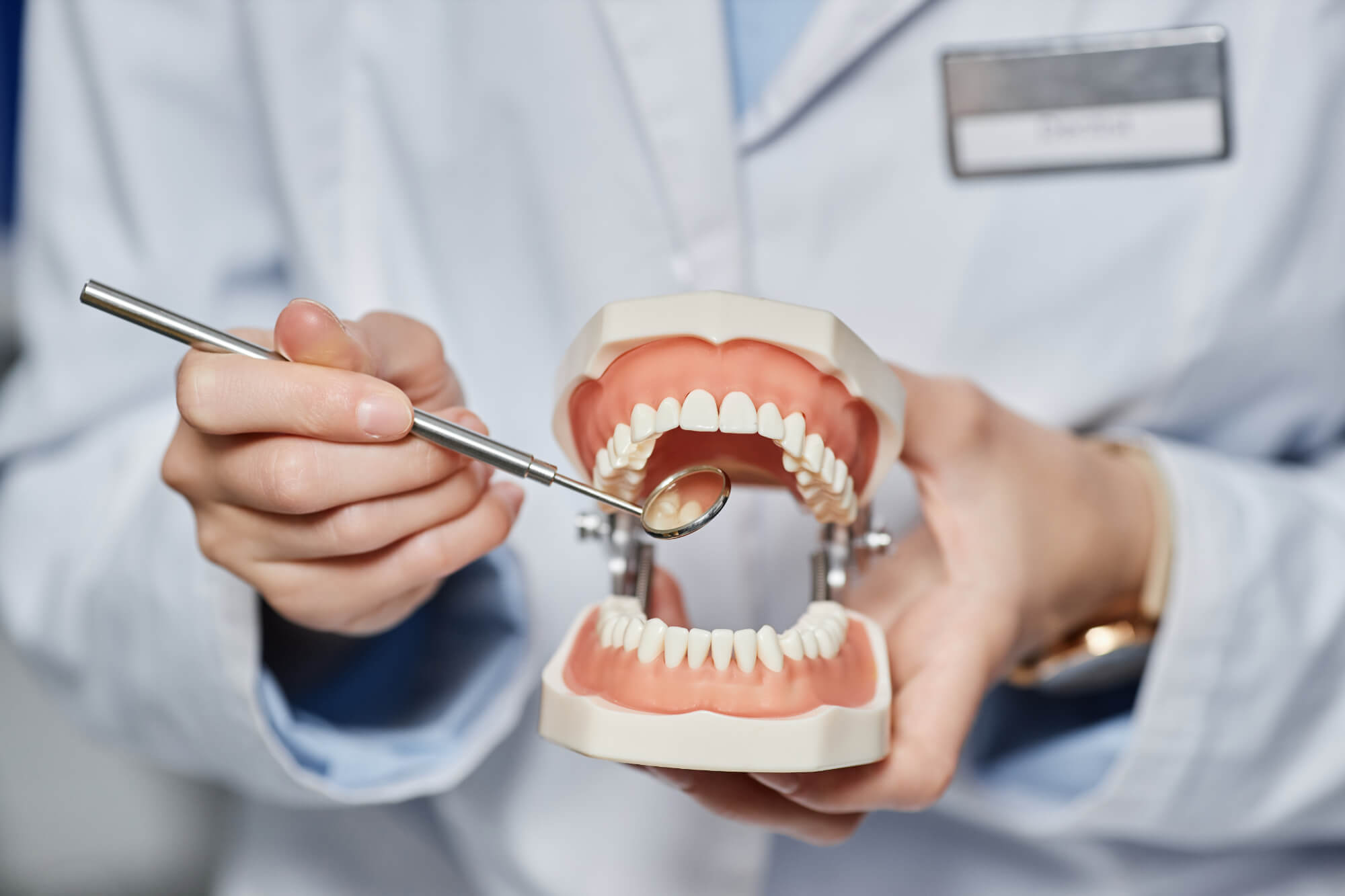
Festsitzender Zahnersatz ist eine dauerhafte Lösung für verlorene Zähne, bietet natürliche Optik und Funktion und erhöht langfristig die Lebensqualität.
Festsitzender Zahnersatz, auch als Prothetik bekannt, umfasst Zahnrestaurationen, die dauerhaft im Mund verankert sind und nicht herausgenommen werden können. Diese Art von Zahnersatz wird eingesetzt, um fehlende Zähne zu ersetzen, die Funktion und Ästhetik des Gebisses zu verbessern und die Gesundheit des Mundes zu erhalten. Zu den gängigen Formen gehören Kronen, Brücken und Implantate. Kronen bedecken beschädigte oder geschwächte Zähne, um sie zu schützen und ihre Form wiederherzustellen. Brücken füllen die Lücke von einem oder mehreren fehlenden Zähnen, indem sie an den benachbarten Zähnen befestigt werden. Implantate ersetzen den gesamten Zahn durch ein in den Kieferknochen eingesetztes Titanimplantat, das als künstliche Zahnwurzel dient, auf die dann eine Krone aufgesetzt wird. Festsitzender Zahnersatz bietet eine langlebige Lösung, die natürlichen Zähnen sehr nahe kommt und sowohl Kau- als auch Sprechfunktionen unterstützt, während er das Selbstbewusstsein und die Lebensqualität verbessert.

Ihr Zahnarzt fertigt Ihre Krone immer individuell und auf Ihre Bedürfnisse zugeschnitten an. Sie kommt zum Einsatz, wenn das Zahnhartgewebe des natürlichen Zahnes in seiner Zahnkrone weitgehend zerstört oder unbrauchbar geworden ist. ( Unter einer Zahnkrone versteht man den Anteil des Zahnes, der aus dem Zahnfleisch ragt. )
Bildlich gesprochen, handelt es sich bei einer Krone um eine körperliche Umfassung des defekten Zahnes, quasi wie ein Hütchen oder eine geschlossene Hülse. Einmal eingesetzt, schützt die Zahnkrone den Zahn gegen kaufunktionielle Kräfte und verleiht ihm so eine neue mechanische Festigkeit. Unter einer künstlichen Krone versteht man einen laborgefertigten Zahnersatz.

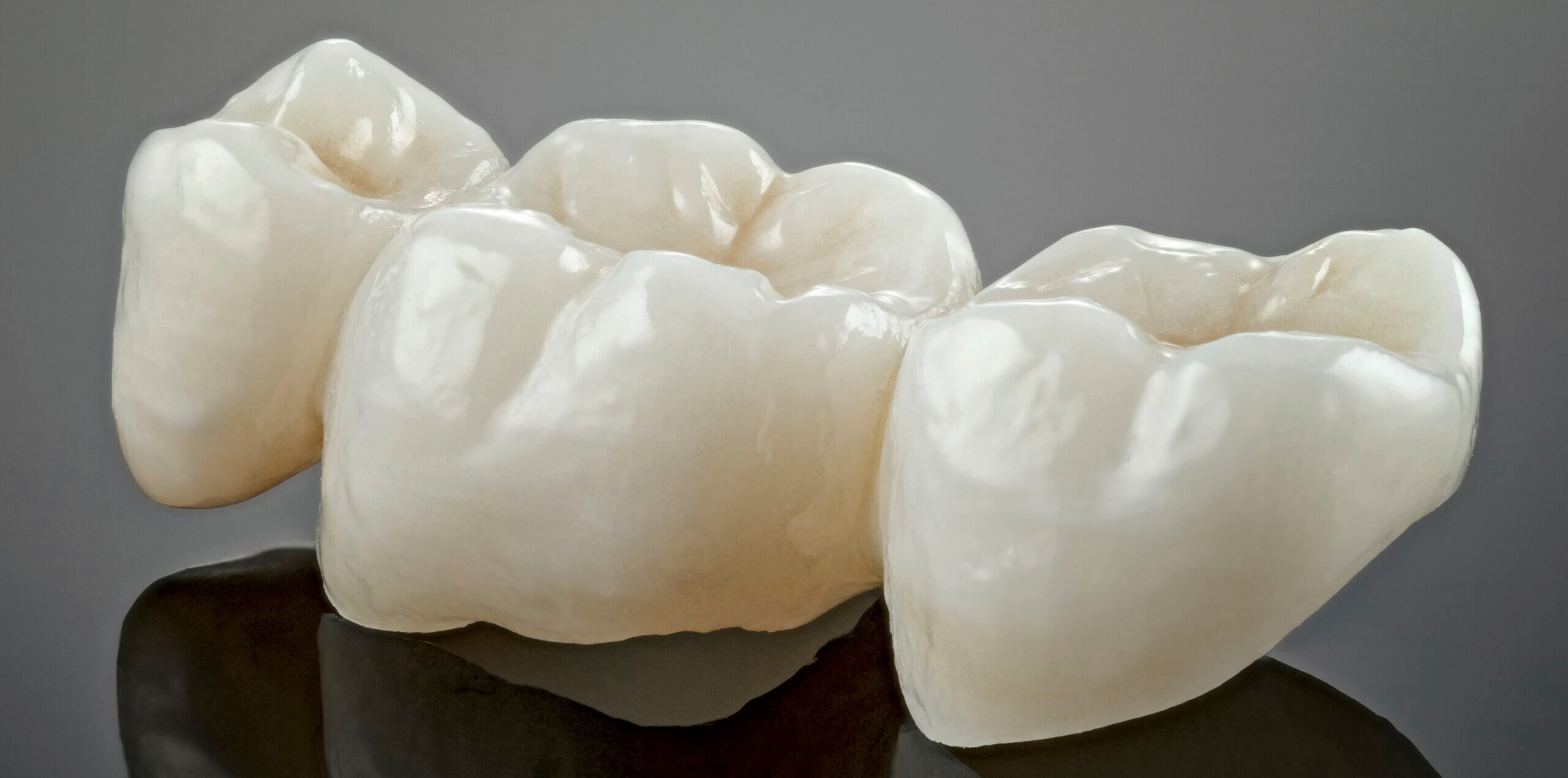
Lücken durch Zahnbrücken zu füllen bedeutet feste ästhetische Zähne ohne chirurgischen Eingriff. Prinzipiell können Lücken in fast jeder Größe mit Zahnbrücken geschlossen werden. Jedoch wird Ihr Zahnarzt darauf achten, dass sich mindestens zwei gesunde Zähne – sogenannte Pfeilerzähne – in der unmittelbaren Nähe der betroffenen Stelle befinden, die stabil und gesund im Kieferknochen sitzen.
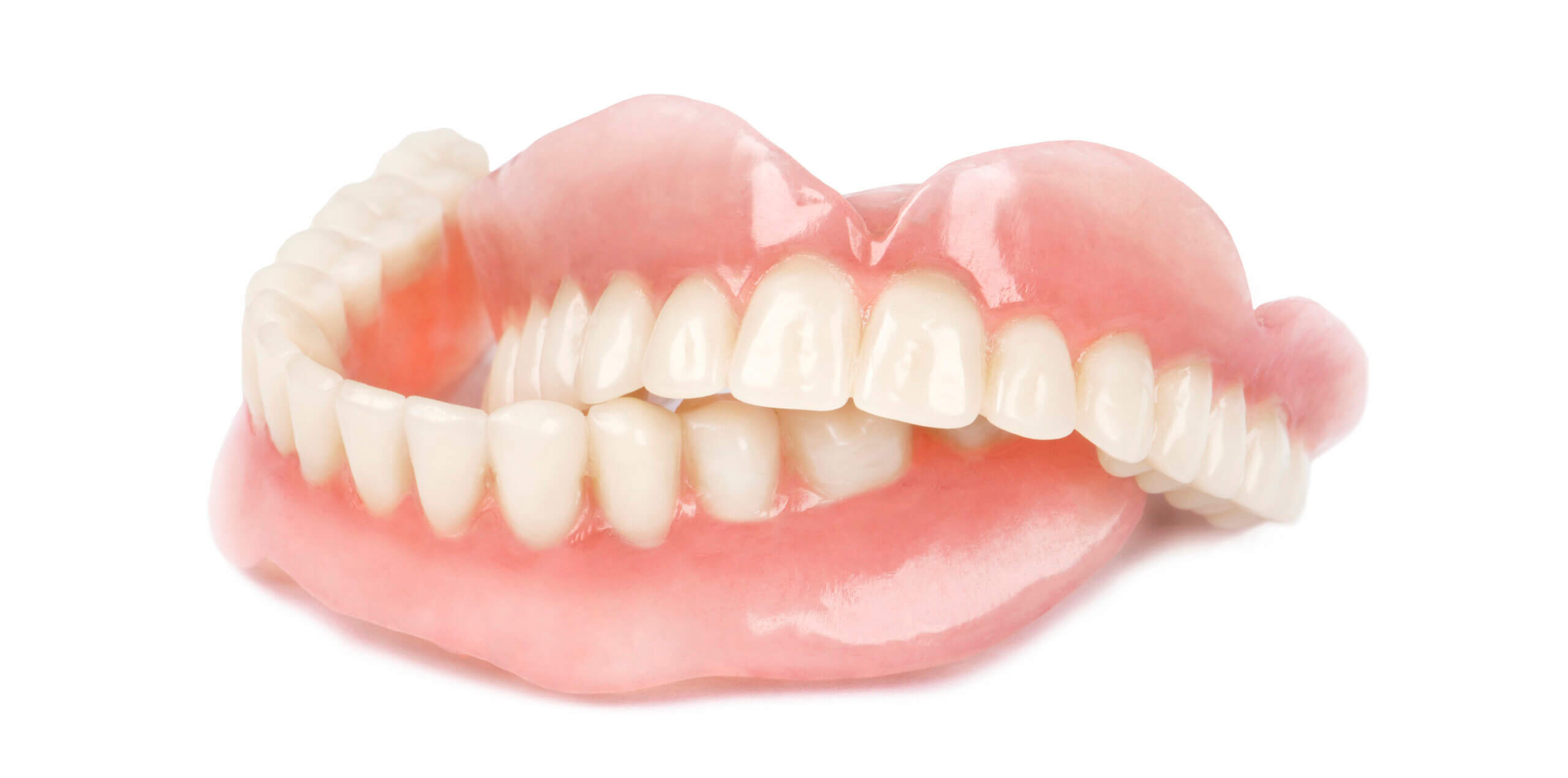
Wenn wir ehrlich sind, wird Ihnen der moderne Zahnarzt Ihres Vertrauens im Normalfall nicht mehr häufig zu einer Prothese raten. Sie ist in die Jahre gekommen und wird nur noch in Ausnahmefällen empfohlen. Der medizinische Fortschritt in der ästhetischen Zahnmedizin ist in den vergangenen Jahren so rasant vorangeschritten, dass heute überwiegend das Implantat zum Einsatz kommt.
Wenn der Verlust der eigenen Zähne, ob durch Unfall, Verfall oder äußere Einwirkungen, nicht mehr zu verhindern ist, stellt sich die Frage nach entsprechendem Zahnersatz, denn oftmals stellt dieser Umstand den Betroffenen vor eine echte physische und mentale Herausforderung.
Gerade im Sichtbereich ist eine signifikante Verminderung der Lebensqualität die Folge.
Digital Smile Design (DSD) ist eine revolutionäre Methode in der ästhetischen Zahnheilkunde, die modernste Technologie mit künstlerischer Vision verbindet, um Ihr Lächeln in Perfektion zu gestalten.
Es ist wie in einer Zeitmaschine:
Bei uns sehen Sie schon heute, wie Sie mit Ihrem perfektes Lächeln morgen aussehen werden.
Ohne eine einzige Behandlung.


Wohlbefinden und Lebensqualität von Menschen jeden Alters hängen eng mit dem jeweiligen, allgemeinen Gesundheitszustand zusammen. Daran hat der funktionstüchtige und gutsitzende Zahnersatz für jeden Patienten einen erheblichen Anteil an der Zufriedenheit mit der eigenen Lebenssituation.
Zahnärzte Dres. Zimny Berlin Erklärung zur Barrierefreiheit
We firmly believe that the internet should be available and accessible to anyone, and are committed to providing a website that is accessible to the widest possible audience, regardless of circumstance and ability.
To fulfill this, we aim to adhere as strictly as possible to the World Wide Web Consortium’s (W3C) Web Content Accessibility Guidelines 2.1 (WCAG 2.1) at the AA level. These guidelines explain how to make web content accessible to people with a wide array of disabilities. Complying with those guidelines helps us ensure that the website is accessible to all people: blind people, people with motor impairments, visual impairment, cognitive disabilities, and more.
This website utilizes various technologies that are meant to make it as accessible as possible at all times. We utilize an accessibility interface that allows persons with specific disabilities to adjust the website’s UI (user interface) and design it to their personal needs.
Additionally, the website utilizes an AI-based application that runs in the background and optimizes its accessibility level constantly. This application remediates the website’s HTML, adapts Its functionality and behavior for screen-readers used by the blind users, and for keyboard functions used by individuals with motor impairments.
If you’ve found a malfunction or have ideas for improvement, we’ll be happy to hear from you. You can reach out to the website’s operators by using the following email
Our website implements the ARIA attributes (Accessible Rich Internet Applications) technique, alongside various different behavioral changes, to ensure blind users visiting with screen-readers are able to read, comprehend, and enjoy the website’s functions. As soon as a user with a screen-reader enters your site, they immediately receive a prompt to enter the Screen-Reader Profile so they can browse and operate your site effectively. Here’s how our website covers some of the most important screen-reader requirements, alongside console screenshots of code examples:
Screen-reader optimization: we run a background process that learns the website’s components from top to bottom, to ensure ongoing compliance even when updating the website. In this process, we provide screen-readers with meaningful data using the ARIA set of attributes. For example, we provide accurate form labels; descriptions for actionable icons (social media icons, search icons, cart icons, etc.); validation guidance for form inputs; element roles such as buttons, menus, modal dialogues (popups), and others. Additionally, the background process scans all the website’s images and provides an accurate and meaningful image-object-recognition-based description as an ALT (alternate text) tag for images that are not described. It will also extract texts that are embedded within the image, using an OCR (optical character recognition) technology. To turn on screen-reader adjustments at any time, users need only to press the Alt+1 keyboard combination. Screen-reader users also get automatic announcements to turn the Screen-reader mode on as soon as they enter the website.
These adjustments are compatible with all popular screen readers, including JAWS and NVDA.
Keyboard navigation optimization: The background process also adjusts the website’s HTML, and adds various behaviors using JavaScript code to make the website operable by the keyboard. This includes the ability to navigate the website using the Tab and Shift+Tab keys, operate dropdowns with the arrow keys, close them with Esc, trigger buttons and links using the Enter key, navigate between radio and checkbox elements using the arrow keys, and fill them in with the Spacebar or Enter key.Additionally, keyboard users will find quick-navigation and content-skip menus, available at any time by clicking Alt+1, or as the first elements of the site while navigating with the keyboard. The background process also handles triggered popups by moving the keyboard focus towards them as soon as they appear, and not allow the focus drift outside it.
Users can also use shortcuts such as “M” (menus), “H” (headings), “F” (forms), “B” (buttons), and “G” (graphics) to jump to specific elements.
We aim to support the widest array of browsers and assistive technologies as possible, so our users can choose the best fitting tools for them, with as few limitations as possible. Therefore, we have worked very hard to be able to support all major systems that comprise over 95% of the user market share including Google Chrome, Mozilla Firefox, Apple Safari, Opera and Microsoft Edge, JAWS and NVDA (screen readers).
Despite our very best efforts to allow anybody to adjust the website to their needs. There may still be pages or sections that are not fully accessible, are in the process of becoming accessible, or are lacking an adequate technological solution to make them accessible. Still, we are continually improving our accessibility, adding, updating and improving its options and features, and developing and adopting new technologies. All this is meant to reach the optimal level of accessibility, following technological advancements. For any assistance, please reach out to