- Zahnärzte Dres. Zimny & Kollegen
-
Uhlandstr. 53
10719 Berlin-Wilmersdorf - [email protected]
- 030 889 20 20 0

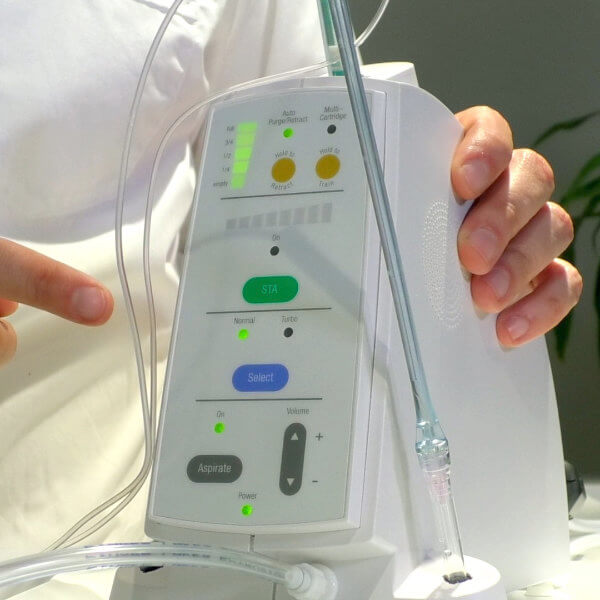
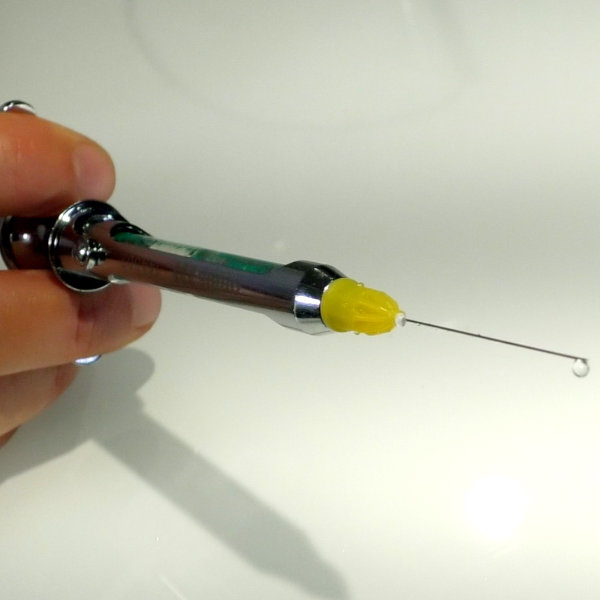

Als bekennender Spritzengegner mit persönlicher Spritzenphobie weiß Dr. Burghardt Zimny genau um die Nöte und Ängste seiner Patienten. So ist es nur naheliegend, dass er sofort nach Serienreife der digitalen Anästhesie seine Praxis zum Wohle seiner Patienten vollständig auf diese neue eindrucksvolle Technologie umgestellt hat. Sehen Sie selbst im folgenden Videointerview, welcher Komfortzuwachs Sie bei der Behandlung erwartet.
Die Spritze selbst und die negativen Gefühle in Bezug auf dieses zahnärztliche Instrument, dass seit Jahrhunderten nicht mehr verbessert wurde, steht bei allen Patientenumfragen nach dem Bohrgeräusch unangefochten auf Platz 2 der Unbeliebtheitsskala der unangenehmen Empfindungen beim Zahnarzt.
Dr. Zimny weiß das aus eigener Erfahrung sehr genau, setzt deshalb konsequent auf die neue Technologie der digitalen Anästhesie und hat alle konventionellen Spritzen weitestgehend aus seiner Praxis verbannt. Bei dem neuen Verfahren wird das Anästhetikum computergesteuert und minimalinvasiv so vorsichtig und schonend abgegeben, wie es kein Arzt es jemals vermochte.
Dr. med. dent. Burghardt Zimny hat jetzt endgültig Schluss mit der unangefochtenen Nummer 2 auf der Unbeliebtheitsskala der unangenehmen Empfindungen beim Zahnarzt gemacht und verbannte aus persönlichen Gründen die altbekannte Spritze weitestgehend aus seiner Praxis.
Mit der digitalen Anästhesie ebnet er so nicht nur für Angstpatienten den Weg zum spritzenfreien und entspannten Zahnarztbesuch. Im folgenden Videointerview erfahren Sie, wie die Zahnärzte bei Dres. Zimny & Kollegen so sanft und schonend arbeiten wie niemals zuvor.
Videointerview Teil 1:
Das Ende der konventionellen Spritze beim Zahnarzt
Videointerview Teil 2:
Computergesteuerte Anästhesie für höchsten Patientenkomfort
Videointerview Teil 3:
Mehr Komfort und keine Angst mehr vor Spritzen beim Zahnarzt
Videointerview Teil 4:
So schonend und unmerklich kann kein Arzt der Welt eine Betäubung geben
Videointerview Teil 5:
Eine nachhaltige Investition in Ihre Gesundheit. Implantate und ihre Lebenserwartung.
Videointerview Teil 6:
Die schmerzfreie Betäubung kann bei allen Behandlungen eingesetzt werden
Videointerview Teil 7:
Höchster Komfort bei Dr. Zimny – als kostenfreier Service für alle Patienten
Die brandneue Technik ist international hoch angesehen, kommt jedoch deutschlandweit leider noch nicht bei so vielen Praxen zum Einsatz. Dr. Burghardt Zimny stellt hier wieder einmal seine technische Innovationsfähigkeit unter Beweis und setzt trotz der erheblichen Mehrkosten für seine Praxis konsequent das digitale Anästhesieverfahren unabhängig vom Versichertenstatus seiner Patienten ein. Das zumindest die gesetzlichen Krankenklassen voraussichtlich diese Mehraufwände nicht übernehmen, stört ihn dabei nicht. Er empfindet den Zuwachs an Komfort und Wegfall von Angstgefühlen bei seinen Patienten vor den konventionellen Spritzen so vorteilhaft, dass seine Praxis die Mehrkosten als Serviceleistung vollständig übernimmt. Es ist ihm wichtiger, dass alle Patienten in den Genuss des schmerz- und angstfreien Anästhesieverfahrens kommen können.
Zusätzlich bietet das neue Verfahren interessante und vorteilhafte Aspekte der zahnmedizinischen Arbeit. So können mit der digitalen Anästhesie sogar gezielt einzelne Zähne oder Regionen kurzfristig narkotisiert werden, um eine schmerzfreie Behandlung zu ermöglichen. Vorbei also die Zeiten, in der noch einige Zeit nach dem Zahnarztbesuch taube Lippen und Kiefer zum Leiden der Patienten hinzukamen. Jetzt ist nichts mehr zu spüren und der Patient hat die Möglichkeit, direkt nach dem Zahnarztbesuch beschwerdefrei seinen Aktivitäten nachgehen zu können. Auch Essen und Trinken nach der Behandlung stellen somit kein Hindernis mehr dar.

Machen Sie sich bei Ihrem nächsten Zahnarztbesuch ein Bild von den neuen Möglichkeiten und genießen Sie die Vorteile der schmerzfreien digitalen Anästhesie und dem Ende der konventionellen Spritze.

Zahnärzte Dres. Zimny Berlin Erklärung zur Barrierefreiheit
We firmly believe that the internet should be available and accessible to anyone, and are committed to providing a website that is accessible to the widest possible audience, regardless of circumstance and ability.
To fulfill this, we aim to adhere as strictly as possible to the World Wide Web Consortium’s (W3C) Web Content Accessibility Guidelines 2.1 (WCAG 2.1) at the AA level. These guidelines explain how to make web content accessible to people with a wide array of disabilities. Complying with those guidelines helps us ensure that the website is accessible to all people: blind people, people with motor impairments, visual impairment, cognitive disabilities, and more.
This website utilizes various technologies that are meant to make it as accessible as possible at all times. We utilize an accessibility interface that allows persons with specific disabilities to adjust the website’s UI (user interface) and design it to their personal needs.
Additionally, the website utilizes an AI-based application that runs in the background and optimizes its accessibility level constantly. This application remediates the website’s HTML, adapts Its functionality and behavior for screen-readers used by the blind users, and for keyboard functions used by individuals with motor impairments.
If you’ve found a malfunction or have ideas for improvement, we’ll be happy to hear from you. You can reach out to the website’s operators by using the following email
Our website implements the ARIA attributes (Accessible Rich Internet Applications) technique, alongside various different behavioral changes, to ensure blind users visiting with screen-readers are able to read, comprehend, and enjoy the website’s functions. As soon as a user with a screen-reader enters your site, they immediately receive a prompt to enter the Screen-Reader Profile so they can browse and operate your site effectively. Here’s how our website covers some of the most important screen-reader requirements, alongside console screenshots of code examples:
Screen-reader optimization: we run a background process that learns the website’s components from top to bottom, to ensure ongoing compliance even when updating the website. In this process, we provide screen-readers with meaningful data using the ARIA set of attributes. For example, we provide accurate form labels; descriptions for actionable icons (social media icons, search icons, cart icons, etc.); validation guidance for form inputs; element roles such as buttons, menus, modal dialogues (popups), and others. Additionally, the background process scans all the website’s images and provides an accurate and meaningful image-object-recognition-based description as an ALT (alternate text) tag for images that are not described. It will also extract texts that are embedded within the image, using an OCR (optical character recognition) technology. To turn on screen-reader adjustments at any time, users need only to press the Alt+1 keyboard combination. Screen-reader users also get automatic announcements to turn the Screen-reader mode on as soon as they enter the website.
These adjustments are compatible with all popular screen readers, including JAWS and NVDA.
Keyboard navigation optimization: The background process also adjusts the website’s HTML, and adds various behaviors using JavaScript code to make the website operable by the keyboard. This includes the ability to navigate the website using the Tab and Shift+Tab keys, operate dropdowns with the arrow keys, close them with Esc, trigger buttons and links using the Enter key, navigate between radio and checkbox elements using the arrow keys, and fill them in with the Spacebar or Enter key.Additionally, keyboard users will find quick-navigation and content-skip menus, available at any time by clicking Alt+1, or as the first elements of the site while navigating with the keyboard. The background process also handles triggered popups by moving the keyboard focus towards them as soon as they appear, and not allow the focus drift outside it.
Users can also use shortcuts such as “M” (menus), “H” (headings), “F” (forms), “B” (buttons), and “G” (graphics) to jump to specific elements.
We aim to support the widest array of browsers and assistive technologies as possible, so our users can choose the best fitting tools for them, with as few limitations as possible. Therefore, we have worked very hard to be able to support all major systems that comprise over 95% of the user market share including Google Chrome, Mozilla Firefox, Apple Safari, Opera and Microsoft Edge, JAWS and NVDA (screen readers).
Despite our very best efforts to allow anybody to adjust the website to their needs. There may still be pages or sections that are not fully accessible, are in the process of becoming accessible, or are lacking an adequate technological solution to make them accessible. Still, we are continually improving our accessibility, adding, updating and improving its options and features, and developing and adopting new technologies. All this is meant to reach the optimal level of accessibility, following technological advancements. For any assistance, please reach out to